What Factors influence the psychological impact color has on people?
Some of the different psychological factors that influence the impact of color can be age, gender,culture and life experiences.
Summarize the feeling each of the following colors evoke in people
Red- The color red can evoke power, danger, fire, strength, and passion.
Green- Green gives off the feeling of nature and and is commonly associated with peace, luck ,envy, and hope.
Violet- This color is royal, dignified, and dramatic.
Name the secondary colors. What primary colors, in what proportions, are used to make each?
The secondary colors are green, orange, and violet. All of these colors are made by mixing an equal amount of two primary color. Green is made with blue and yellow, orange is red and yellow, and finally, violet, is made of blue and red.
Which color name is listed first in the name of a tertiary color?
Tertiary, or intermediate colors, are named first with the primary color and then with the secondary color. For example, a mix of blue and green is called "blue-green."
Contrast value and intensity of color?
Value refers to lightness and darkness of a color while intensity refers to how bright or dull a color is.
What are the differences between a tint, shade, and tone?
Tint is adding white to a color, shade is adding black, and tone is adding grey to a color.
Summarize how to neutralize a hue.
To neutralize a hue you must mix it with its opposite color. fore example, you can mix blue and orange to neutralize it, or green and red, etc.
Name two warm colors and two cool colors.
Two warm colors are red and orange. Two cool colors are blue and green.
Identify an example of each of the seven color harmonies.
A monochromatic harmony is one basic hue, with its tints, shades and tones. An example would be a light blue, a grey blue and a navy blue.
A Complementary harmony is colors across from each other on the color wheel. Blue and Orange is an example of this.
An example of a Split-Complimentary harmony is blue, red-orange, and yellow-orange.
Double complimentary colors are two pairs of complementary colors. For example, red and green and violet and yellow fit this.
Analogous colors are next to each other on the color wheel. Red, red-orange, and orange is an analogous color harmony.
Triadic color harmonies use colors that are an equal distance apart on the color wheel. An example is yellow, blue, and red.
Neutral color harmonies simply use neutral colors, such as grey, black ,and white.
What factors influence the way color harmonies are used in planning an interior design?
Mood. styles, lifestyle, function of the room, objects in the room, and location of the room influence the way color harmonies are used.
Summarize the guidelines for using color correctly in a room design.
The guidelines for using color correctly are: color gains intensity over large areas, contrasting colors draw attention, color harmonies are easier on the eye when the base color dominates, select low intensity colors for large spaces, heavily textured colors make surfaces appear darker, if a space is large choose a color to make it appear smaller, if a room is small, and choose colors to make it appear larger.
Question #13 (I'm not typing that one all the way out)
Instead of just warm, or just cool colors, the couple should choose a mix of both. This can be done using harmonies. The best choice would be to choose a complimentary harmony that would use one warm, and one cool color. They do not have natural lighting, though, so they will have to be careful how the type of light they use will change or distort the color.
Tuesday, March 10, 2015

Monday, March 9, 2015
Elements of Design: Texture

This week in interior design we were talking about the elements of design, specifically texture. We were to create an Oilioboard containing at least 12 items to show visual, tactile, and audible texture. Obviously I found more than 12 items. So, i will discuss four items that fit each category. First up is...Visual!
The small green plant appears to have an organic shape (not straight, symmetric lines, but curvy, willy-nilly lines). If you were to touch it, it probably would be slightly rough because of its tiny little leaves. This plants contributes an organic, natural feeling to the room. In the lower right hand corner there is a silver, shiny pig. It would probably have a smooth and cool surface. Mr. piggy gives of an interesting vibe to the room, on one hand it gives it a sleek feel, but also a homey-cutesy feeling. Hanging from the ceiling sits a wild, pink chandelier. This funky piece is made to look like a big tangle of vines and flowers. It is probably made of a paper or thing cardboard, so it would be pretty rough because of all the little pieces, but smooth we just toughing a small part of the paper. It gives off a fun, energetic feeling because of all the crisscrossing diagonal lines. Last up for visual texture, the barrel side table located front a center. it looks to made of fake wood, to give the allusion of having a rough texture, but is slightly shiny which could suggest that it may be smooth. This is yet another piece that gives a natural feeling to the room.
Tactile texture is directly how the object will feel. On top of the barrel side table I have just mentioned, it s funky looking bird that I am not quite sure if it is supposed to be a vase or a bowl. it has a smooth glaze, but the out side of the vase/bowl has bumps over it. This adds more interest to the piece. Overall, the smoothness of this object adds a sleekness to the room. On the floor next to the vase/bowl it the zebra rug. this one depends on how you tough the object, if you just step on it, or feel it in the direction the fur goes, it will be very soft, but if you go against the fur it will feel rough and course. More often, you'll probably feel the softness of it, resulting in a homey feel added to the room.Behind the couch is a large wooden shelf. This shelf has not been stained or given any sort of covering, so it is rough feeling like normal wood. It has some metal brackets and bolts holding it together, and those a smoother. The natural feeling object gives this room an organic feel, and the brackets and bolt give the room a slight industrial feel. On the floor to the left of shelf is small army of elephants (and one giraffe) which contains a grey plush elephant. The elephant is very soft and squishy. This gives the room a soft, homey feel.
The final element of texture to discuss is audible. This on is tricky because it is harder to think about how the object sounds and how that contributes to the room. without further ado, I give you the first audible texture object: The couch. This is a leather couch, so I would imagine it would be pretty noisy. My first thought is it would be squeaky. I also think it would be pretty creaky when moving around on it. Leather is typically regarded as a higher end characteristic, so this gives the room an expensive feel. Sitting on the couch is a Buddha statue, and behind that is pretty, blue vase. This vase is going to have a musical note-esk ding when it is hit. The sound will be as soft and pretty as the appearance is. Overall, this piece will give the room a more soft, dainty feel. Across the room, there is a bright, aqua blue rocking chair. This will give off a creaky sound when rocked on. This sound has a connotation reminding someone of a small cozy home, and therefore, gives the room the same sort of feeling. The Final object sits on top of the dresser at the middle back of the room. A metallic skull figure has a hollow sound (as it is likely hollow on the inside). Combining the look of the figure, the skull itself, and the sound, this object gives off a feeling of eeriness, and openness.
Tuesday, March 3, 2015
Elements of Design: Lines
Curved Lines
This room design is full of curved lines. From the couch, to to the fanlights above the windows, to the tables, lamps and chandelier, curved lines are featured throughout the room. These lines are more decorative than functional. They make the room look large and expansive. They give the room more interest and softness. The room feels more charming, flowy, and comfortable.
Vertical Lines
This Olioboard showcases vertical lines. They can be found on the corners of the walls, windows and window casement, curtains, and a picture board. These successfully make the room appear taller and draw the eye upward. These lines give this room a more regal, and formal feeling. Most of these lines are functional and serve a purpose, like the windows and walls. Others, however, are more decorative, like the picture board. The curtains and window casement can be categorized by both.
Horizontal Lines
This Olioboard shows horizontal lines through the top of the table, top of the windows, bottom of the rug, and the line of the chair tops. These lines make the space appear wider, and draws the eye out. Typically, horizontal lines give off a restful, casual feeling.
Diagonal Lines
Diagonal lines are more difficult to find in Olioboard designs, but this on shows them pretty well. The rug on the floor contains cross-crossing diagonal likes, and the legs of the table also contain diagonal boards. These lines are all more decorative than they are functional. They add interest to a room and give the allusion of movement or excitement.
This room design is full of curved lines. From the couch, to to the fanlights above the windows, to the tables, lamps and chandelier, curved lines are featured throughout the room. These lines are more decorative than functional. They make the room look large and expansive. They give the room more interest and softness. The room feels more charming, flowy, and comfortable.
Vertical Lines
This Olioboard showcases vertical lines. They can be found on the corners of the walls, windows and window casement, curtains, and a picture board. These successfully make the room appear taller and draw the eye upward. These lines give this room a more regal, and formal feeling. Most of these lines are functional and serve a purpose, like the windows and walls. Others, however, are more decorative, like the picture board. The curtains and window casement can be categorized by both.
Horizontal Lines
This Olioboard shows horizontal lines through the top of the table, top of the windows, bottom of the rug, and the line of the chair tops. These lines make the space appear wider, and draws the eye out. Typically, horizontal lines give off a restful, casual feeling.
Diagonal Lines
Diagonal lines are more difficult to find in Olioboard designs, but this on shows them pretty well. The rug on the floor contains cross-crossing diagonal likes, and the legs of the table also contain diagonal boards. These lines are all more decorative than they are functional. They add interest to a room and give the allusion of movement or excitement.
Friday, February 6, 2015
Housing Accessories Styles
This week in Interior Design we are learning about different housing accessories such as roof styles, window styles, and characteristics seen on houses. So, to start off, we'll go over some roofing styles first.
Roofing Styles
Gable Roof

The Gable roof is one of the most popular styles of roofs. By definition, it is a roof with two sloping sides, forming a triangle at one or both ends.
Gambrel Roof

The Gambrel roof is often seen on barns like this one, (excuse me while I drool over it) but can also be on houses, as well. It is a roof with two angles of slope on each of two sides, the lower slop steeper than the upper slope.
Hipped Roof

The Hipped roof is defined by all four sides of the roof sloping inward to meet at a peak or ridge.
Saltbox Roof

The Saltbox roof is a variation of the Gable roof. It was originally created when a low lean-to addition was built onto the back wall of a house.
Mansard Roof

All four sides of this roof have two slopes, the lower four have steeper slopes than the upper four.
Shed Roof

This is a simple, one-slope roof. It is also referred to as a lean-to roof.
Housing Characteristics
Bay Window

This a a set of two or more windows that protrude out from the wall. The windows is moved away from the wall to provide more light and wider views. (By the way, they also can make super cool reading nooks in houses :) )
Casement Window

A casement in opens by swinging inward or outward much like a door. They are usually vertical in shape but are often grouped in bands.
Clapboard

Clapboard is also commonly referred to as weatherboard or siding. Long, Narrow boards are overlapped to cover the outer walls of a house. It is used in colonial style frame houses.
Dormer

The setting for a vertical window in the roof. If it has its own gable, such as this one, then it is called a gable dormer. If it has a flat roof, it is called a shed dormer. These are often found in upstairs bedrooms.
Eaves

These are simply the portion of the roof that projects beyond the wall.
Fanlight

This is a semi circle, or arched window above a door.
Palladian Window

A three part window featuring a large ached center and flanking rectangular sidelights.
Pediment
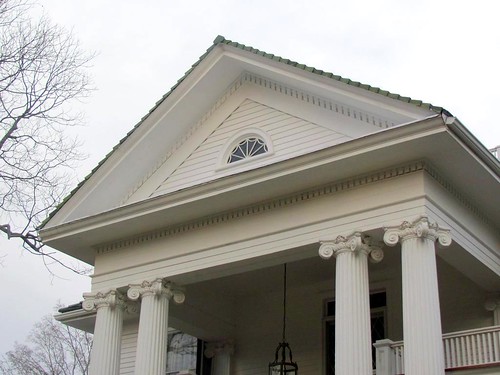
A triangular crown used over doors, windows, or porches. This is a classical style.
Portico

A large porch usually with a pedimented roof supported by classical columns or pillars.
Rafter

A roof bean sloping from the ridge to the wall. In most houses, rafters are only visible in the attic. I styles such as craftsman bungalows and some "rustic" contemporaries, they are exposed.
Sidelights

Windows on either side of a door.
Turret

A small tower, often at the corners of a building. Common in Queen Anne styles among others. A Turret is a smaller structure while a tower begins at ground level.
P.S. Can you guess what TV show this is from? Hint: it's the "Murder House" from American Horror story.
Roofing Styles
Gable Roof
The Gable roof is one of the most popular styles of roofs. By definition, it is a roof with two sloping sides, forming a triangle at one or both ends.
Gambrel Roof
The Gambrel roof is often seen on barns like this one, (excuse me while I drool over it) but can also be on houses, as well. It is a roof with two angles of slope on each of two sides, the lower slop steeper than the upper slope.
Hipped Roof
The Hipped roof is defined by all four sides of the roof sloping inward to meet at a peak or ridge.
Saltbox Roof
The Saltbox roof is a variation of the Gable roof. It was originally created when a low lean-to addition was built onto the back wall of a house.
Mansard Roof
All four sides of this roof have two slopes, the lower four have steeper slopes than the upper four.
Shed Roof
This is a simple, one-slope roof. It is also referred to as a lean-to roof.
Housing Characteristics
Bay Window
This a a set of two or more windows that protrude out from the wall. The windows is moved away from the wall to provide more light and wider views. (By the way, they also can make super cool reading nooks in houses :) )
Casement Window
A casement in opens by swinging inward or outward much like a door. They are usually vertical in shape but are often grouped in bands.
Clapboard
Clapboard is also commonly referred to as weatherboard or siding. Long, Narrow boards are overlapped to cover the outer walls of a house. It is used in colonial style frame houses.
Dormer
The setting for a vertical window in the roof. If it has its own gable, such as this one, then it is called a gable dormer. If it has a flat roof, it is called a shed dormer. These are often found in upstairs bedrooms.
Eaves
These are simply the portion of the roof that projects beyond the wall.
Fanlight
This is a semi circle, or arched window above a door.
Palladian Window
A three part window featuring a large ached center and flanking rectangular sidelights.
Pediment
A triangular crown used over doors, windows, or porches. This is a classical style.
Portico
A large porch usually with a pedimented roof supported by classical columns or pillars.
Rafter
A roof bean sloping from the ridge to the wall. In most houses, rafters are only visible in the attic. I styles such as craftsman bungalows and some "rustic" contemporaries, they are exposed.
Sidelights
Windows on either side of a door.
Turret
A small tower, often at the corners of a building. Common in Queen Anne styles among others. A Turret is a smaller structure while a tower begins at ground level.
P.S. Can you guess what TV show this is from? Hint: it's the "Murder House" from American Horror story.
Wednesday, February 4, 2015
Housing Life Cycles
This week in Interior Design We learned about the physical and psychological needs of every person, and how that relates to the housing needs for different parts of the life cycle. The physical needs are storage, safety, shelter, sleep, and food preparations. The psychological needs are Love and belonging, privacy, creativity, and identity. The life cycle is the different stages of life from infancy to old age. The chart we used in class showed a circle and started on the upper right side at Young Adult. It went around clockwise to Young Families, Launching, and finally Empty Nesters in the upper left corner of the circle. It looked like this:
Empty Nesters Young Adults
Lunching Young Families
This is an important aspect of housing because a persons need are not the same at every stage of life. Young Adults will traditionally have a smaller housing situation than someone who is at the Young Family stage. The Launching stage will also have an even bigger home than the Young Families. Unlike the pattern up until this point, the Empty Nesters will likely have a smaller house because their needs no longer require as much space.
What will my homes look like at these various stages in my life? Good question, they will probably look something like this:
22-Young Adult

When I am 22 I will be in the young adult stage, and at the point where I am about to graduate from college, or have about a year year left. I will likely live in an apartment in a building like this. It is Located in downtown Fargo because the few architecture buildings (I'll be majoring in architecture) of NDSU are here, unlike most of the rest of the campus. It will close to where I need to be most of the time which will be very convenient versus having to go all the way across town relying on public transportation everyday. This will be a smaller space that will not cost an arm and a leg to rent, and I'll probably be sharing it will other people as well.
33-Young Families

By the time I'm 33, I will probably be married with a kid or two, so that would put me in the Young Families stage. My house will be a small farm house type somewhere in the country with lots of land and a big red dairy barn. Think picturesque scenery. It will a have a couple bedrooms and a decent sized living space. It wont be the house of my dreams, but it's a good starter home.
42-Launching
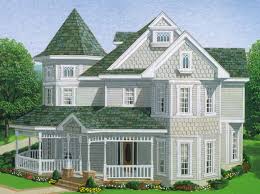
When I am 42 my two to four kids will be rambunctious teenagers who often invite friends over. With many people in the house, more space is required or else we'd all probably go a little crazy being so close all the time. I'd rather not have my future kids resent me because they can't get away from my craziness. I'd hope for this house to have a big beautiful kitchen, several bedrooms, an few separate living spaces. Instead of the big red dairy barn, there might be a big indoor riding facility in the backyard with some horses happily living inside (maybe this is wishful thinking, buy hey, I can make up whatever I want my future homestead to be like). Now THIS is closer to my dream home!
75-Empty Nesters
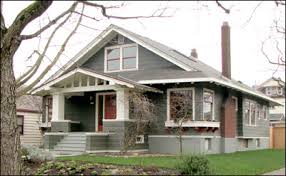
At 75 (an Empty Nester) I'll probably still be dreaming of the last house, but my little old self wouldn't be able to take care of that huge house--I'd probably break a hip! This place would be likely be one story, MAYBE two (I don't want to fall down the stairs) and have two bedrooms, one for me, one for guests. I'd hope That the kitchen would still be big and beautiful because I'll have taken to baking every single moment of my retirement. I'm unsure if this would also be in the country on a small farm like the two previous, but I sure hope it is. If not, it would probably be in one of those "older" neighborhoods where the houses aren't all the same.
All these houses are a good example of what I may need some day during the different stages of the life cycle.
Empty Nesters Young Adults
Lunching
This is an important aspect of housing because a persons need are not the same at every stage of life. Young Adults will traditionally have a smaller housing situation than someone who is at the Young Family stage. The Launching stage will also have an even bigger home than the Young Families. Unlike the pattern up until this point, the Empty Nesters will likely have a smaller house because their needs no longer require as much space.
What will my homes look like at these various stages in my life? Good question, they will probably look something like this:
22-Young Adult
When I am 22 I will be in the young adult stage, and at the point where I am about to graduate from college, or have about a year year left. I will likely live in an apartment in a building like this. It is Located in downtown Fargo because the few architecture buildings (I'll be majoring in architecture) of NDSU are here, unlike most of the rest of the campus. It will close to where I need to be most of the time which will be very convenient versus having to go all the way across town relying on public transportation everyday. This will be a smaller space that will not cost an arm and a leg to rent, and I'll probably be sharing it will other people as well.
33-Young Families
By the time I'm 33, I will probably be married with a kid or two, so that would put me in the Young Families stage. My house will be a small farm house type somewhere in the country with lots of land and a big red dairy barn. Think picturesque scenery. It will a have a couple bedrooms and a decent sized living space. It wont be the house of my dreams, but it's a good starter home.
42-Launching
When I am 42 my two to four kids will be rambunctious teenagers who often invite friends over. With many people in the house, more space is required or else we'd all probably go a little crazy being so close all the time. I'd rather not have my future kids resent me because they can't get away from my craziness. I'd hope for this house to have a big beautiful kitchen, several bedrooms, an few separate living spaces. Instead of the big red dairy barn, there might be a big indoor riding facility in the backyard with some horses happily living inside (maybe this is wishful thinking, buy hey, I can make up whatever I want my future homestead to be like). Now THIS is closer to my dream home!
75-Empty Nesters
At 75 (an Empty Nester) I'll probably still be dreaming of the last house, but my little old self wouldn't be able to take care of that huge house--I'd probably break a hip! This place would be likely be one story, MAYBE two (I don't want to fall down the stairs) and have two bedrooms, one for me, one for guests. I'd hope That the kitchen would still be big and beautiful because I'll have taken to baking every single moment of my retirement. I'm unsure if this would also be in the country on a small farm like the two previous, but I sure hope it is. If not, it would probably be in one of those "older" neighborhoods where the houses aren't all the same.
All these houses are a good example of what I may need some day during the different stages of the life cycle.
Thursday, January 29, 2015
Interior Design Blogs
This week in interior design we are looking at various interior design blogs. These are helpful because they allow for a wide range of people to view a designers work and style.
The first blog I visited was Swoon Worthy. It was started in 2010 by Kimberly Duran when she began renovating her home. The ideas she show cases are affordable design idea since she, and most people, don't have a "lottery-win budget" as she calls it. She describes her style as vintage and boho (bohemian- style). The blog has won a few Top 5 awards for best DIY Blog. Swoon Worthy can be found at http://www.swoonworthy.co.uk/about-me/
The second blog I looked at was Retro Renovation. This blog showcases various renovations of retro style. From Kitchens, to bathrooms and more these rooms all give reader blast from the past. The site is run by Pam Keuber who began this site when renovation her 1951 home back to its' original glory. The site can be found at http://retrorenovation.com/pams-kitchen/
The final Blog I have chosen is Interior Arcade. This is a super user friendly website that had a range of home design topics. It has categories for room design, home design, furniture, and other interior design subjects. With a variety of style to accommodate users, it suits most peoples needs. Not only can people search for ideas, they can submit ideas for others to use. There are several people who contribute to the many blog posts available. This can be found at http://www.interiorarcade.com/about/
Of these three blogs, I would have to say that Interior Arcade is my favorite because it offers a variety of styles, and I like different ones day to day a little more than others, so this blog is good for that. A cool trend I saw on these blogs was incorporating a lot of DIY projects into home designs. Another trend was using vintage items in the bloggers chosen designs.
The first blog I visited was Swoon Worthy. It was started in 2010 by Kimberly Duran when she began renovating her home. The ideas she show cases are affordable design idea since she, and most people, don't have a "lottery-win budget" as she calls it. She describes her style as vintage and boho (bohemian- style). The blog has won a few Top 5 awards for best DIY Blog. Swoon Worthy can be found at http://www.swoonworthy.co.uk/about-me/
The second blog I looked at was Retro Renovation. This blog showcases various renovations of retro style. From Kitchens, to bathrooms and more these rooms all give reader blast from the past. The site is run by Pam Keuber who began this site when renovation her 1951 home back to its' original glory. The site can be found at http://retrorenovation.com/pams-kitchen/
The final Blog I have chosen is Interior Arcade. This is a super user friendly website that had a range of home design topics. It has categories for room design, home design, furniture, and other interior design subjects. With a variety of style to accommodate users, it suits most peoples needs. Not only can people search for ideas, they can submit ideas for others to use. There are several people who contribute to the many blog posts available. This can be found at http://www.interiorarcade.com/about/
Of these three blogs, I would have to say that Interior Arcade is my favorite because it offers a variety of styles, and I like different ones day to day a little more than others, so this blog is good for that. A cool trend I saw on these blogs was incorporating a lot of DIY projects into home designs. Another trend was using vintage items in the bloggers chosen designs.
Tuesday, January 27, 2015
Mood Board

This week in Interior Design we were learning about mood boards. A mood board is also known as a motivation board. It is a way for someone to express their style and personality. Interior Designers use them to show home owners what they are thinking of putting in a room, so the client can have a feel of the style to decide if they want that in their home or not. This room describes me because it uses soft shades of blue and yellow, and I am generally a pretty soft spoken person. They are also calming colors, and I am usually a calm person who avoid conflict. I put a bunch of pictures up in a sort of messy order because I am a pretty disorganized person. The style I chose was a mixture of shabby chic (I think?) and something a little more classic-looking. The HGTV quiz told me my style was “French country” so I think this is a pretty close example of that. This room cost a whopping total of $9,945.98. In conclusion, this board is a tool that I have used to express my personality.
Subscribe to:
Comments (Atom)